

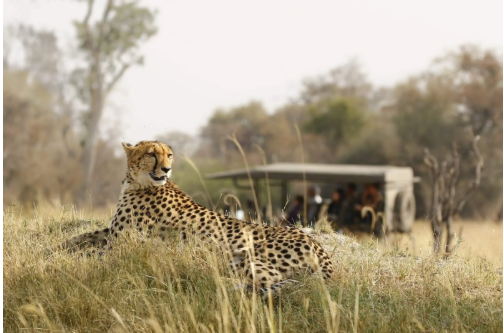

The phrase “African safari tanzania” evokes powerful imagery of golden savannas stretching toward distant horizons, majestic wildlife moving in harmonious patterns established over millennia, and the visceral thrill of witnessing nature’s most dramatic moments unfold before your eyes. Among all destinations where these dreams can become reality, Tanzania emerges as the undisputed champion, offering safari experiences that consistently exceed even the most elevated expectations. This remarkable country transforms the concept of wildlife tourism into something far more profound—a genuine connection with Earth’s primordial wilderness that changes how you perceive humanity’s place within the natural world.
Understanding Tanzania’s Safari Supremacy
Tanzania’s dominance in the safari world stems from deliberate conservation choices made decades ago that continue paying dividends today. The Tanzanian government recognized early that the country’s wildlife represented both a natural treasure worth protecting and an economic asset capable of generating sustainable revenue. This foresight led to establishing one of Africa’s most extensive protected area networks, currently encompassing sixteen national parks, numerous game reserves, conservation areas, and marine parks that collectively safeguard nearly 300,000 square kilometers of wilderness.
This conservation infrastructure creates conditions where wildlife populations thrive rather than merely survive. Unlike regions where human encroachment has fragmented habitats into isolated pockets, Tanzania’s protected areas maintain ecological connectivity that allows animals to follow traditional migration routes, access seasonal resources, and maintain genetic diversity through population mixing. These functioning ecosystems support the complex predator-prey relationships, competitive dynamics, and behavioral repertoires that make wildlife viewing so compelling.
Tanzania’s geographical position in East Africa provides additional advantages. Positioned just south of the equator, the country experiences relatively stable climatic patterns that support year-round wildlife viewing. The convergence of different biogeographical zones—from coastal lowlands to volcanic highlands, from semi-arid savannas to montane forests—creates exceptional habitat diversity that translates directly into species richness. This ecological variety ensures that Tanzania safari itineraries can encompass radically different environments and wildlife communities within relatively compact geographical areas.
The maturity of Tanzania’s tourism sector represents another critical success factor. Decades of safari operation have produced world-class guides whose knowledge extends far beyond simply locating animals to providing meaningful interpretation of behaviors, ecological relationships, and conservation challenges. The accommodation spectrum ranges from authentic bush camps maintaining traditional safari character to architecturally stunning lodges offering luxury without compromising environmental sensitivity. This infrastructure maturity ensures that visitors can focus on wildlife experiences rather than logistical complications.
Serengeti National Park: The Crown Jewel
When people worldwide imagine African safaris, the images conjured most frequently derive from the Serengeti. This 14,750 square kilometer wilderness represents the archetypal safari landscape—vast grasslands punctuated by scattered acacia trees, granite kopjes rising like islands from grassy seas, and wildlife in such abundance that the mind struggles to comprehend the scale. The Serengeti functions as Earth’s last great wildlife refuge where ecological processes continue largely as they have for hundreds of thousands of years.
The Great Migration represents the Serengeti’s most celebrated feature and rightfully so. This continuous circular movement involves over two million animals—primarily wildebeest but including substantial zebra and gazelle populations—driven by the imperative to access fresh grazing and water. The migration follows seasonal rainfall patterns in a roughly predictable annual cycle, though exact timing varies based on when and where rains fall.
Understanding the migration cycle allows strategic safari planning. Between late December and March, the herds occupy the southeastern Serengeti and adjacent Ndutu region where volcanic soils produce nutrient-rich short grasses ideal for the calving season. During a concentrated six-week period, approximately 500,000 wildebeest calves are born, creating a brief abundance of vulnerable prey that attracts every predator within range. This period offers exceptional opportunities to witness hunting behaviors as lions, cheetahs, hyenas, jackals, and leopards capitalize on easy targets.
As these southern grasslands exhaust their resources around April, the herds begin their northwestern trek through the Serengeti’s central plains and Western Corridor. By June, the leading animals reach the Grumeti River where the first major crossings occur. These western crossings, while less famous than those at the Mara River, still provide dramatic viewing as nervous herds negotiate river channels containing large crocodiles that have waited months for this annual feast.
The migration’s most iconic phase occurs between July and October when the herds mass along the Mara River dividing the northern Serengeti from Kenya’s Maasai Mara. The river presents a formidable barrier—steep banks, strong currents, and significant crocodile populations create genuine danger. The crossings happen unpredictably based on herd dynamics, weather conditions, and factors scientists still don’t fully understand. Animals may gather for days, building tension palpably, before something triggers the plunge and thousands stampede into churning waters. These crossings epitomize nature’s drama—survival, death, panic, determination, and the overwhelming power of instinct all colliding in minutes of chaos.
Yet the Serengeti offers far more than migration spectacles. Resident wildlife populations ensure exceptional viewing year-round. The park supports approximately 3,000-4,000 lions organized into territorial prides, making the Serengeti the world’s premier destination for observing lion behavior. Researchers have studied Serengeti lions for over 50 years, revealing complex social structures, hunting strategies, and territorial dynamics. Visitors benefit from this research legacy through guides who can interpret behaviors based on scientific understanding rather than speculation.
Cheetahs favor the Serengeti’s open plains where their explosive speed provides advantages. The park harbors significant cheetah populations concentrated in areas like the southeastern plains where visibility and prey abundance support their hunting strategy. Leopards, more elusive and predominantly nocturnal, still appear with reasonable frequency, particularly around kopjes and riverine areas where they cache kills in trees away from competitors. Spotted hyena clans maintain complex social hierarchies and territorial systems that rival lion prides in sophistication.
Ngorongoro Conservation Area: Ancient Crater, Modern Marvel
The Ngorongoro Conservation Area protects one of nature’s most stunning creations—a massive volcanic caldera formed when an ancient volcano, possibly rivaling Kilimanjaro in height, collapsed inward approximately 2-3 million years ago. The resulting crater measures 19-20 kilometers in diameter with walls rising 400-610 meters, creating a natural amphitheater that functions somewhat like an enormous wildlife arena visible from multiple viewpoints along the rim.
What makes Ngorongoro extraordinary extends beyond geological spectacle to ecological function. The crater floor encompasses approximately 265 square kilometers containing remarkable habitat diversity—open grasslands, acacia woodlands, freshwater swamps, the alkaline Lake Magadi, and scattered fever tree forests. This habitat mosaic supports between 25,000-30,000 large mammals, creating one of Earth’s highest wildlife densities. The crater walls, while not insurmountable barriers, create sufficient separation that wildlife populations maintain relative stability year-round rather than migrating with seasons.
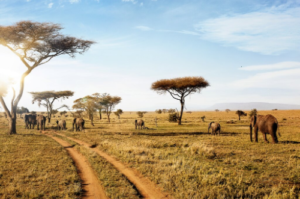
This stability and concentration make Ngorongoro exceptionally reliable for wildlife viewing. Most visitors observe lions, elephants, buffaloes, zebras, wildebeest, hippos, and various antelope species within a single half-day crater floor visit. The permanent water sources ensure animals remain present regardless of external seasonal conditions affecting surrounding areas. For visitors with limited time or those wanting guaranteed sightings of particular species, Ngorongoro provides optimal conditions.
Black rhinoceros represent Ngorongoro’s conservation crown jewel. The crater shelters one of Tanzania’s few stable black rhino populations with approximately 30-60 individuals—precise numbers remain uncertain due to these animals’ elusive nature. These critically endangered creatures, decimated by poaching for horn that reduced continental populations by over 95% during the late 20th century, find relative security within Ngorongoro’s protected confines. Intensive anti-poaching efforts and the crater’s natural boundaries help safeguard these survivors. Spotting a rhino grazing peacefully on the crater floor represents both a wildlife highlight and a conservation success story demonstrating that protection efforts can enable recovery.
The crater’s lion population has fascinated researchers for decades. These lions display interesting behavioral adaptations including male coalitions that control prides differently than typical Serengeti patterns. The abundance of prey and spatial constraints of the crater environment create unique competitive dynamics among predators. Additionally, genetic concerns have emerged as the crater’s semi-isolated lion population shows reduced genetic diversity compared to open ecosystem populations, demonstrating conservation challenges even in protected areas.
Beyond the famous crater, the Ngorongoro Conservation Area encompasses other significant features worth exploring when time permits. The Olduvai Gorge, located within the conservation area, represents one of paleoanthropology’s most important sites where the Leakey family discovered crucial evidence of early human evolution spanning millions of years. The Empakaai Crater, smaller and less visited than Ngorongoro, offers beautiful scenery including a deep crater lake attracting thousands of flamingos. These additional attractions enrich the conservation area beyond its wildlife focus.
Tarangire National Park: Underrated Excellence
Tarangire National Park occupies a special place among African safari Tanzania northern circuit destinations as a park that consistently delivers exceptional wildlife experiences despite receiving less attention than the Serengeti or Ngorongoro. This relative obscurity actually benefits visitors by ensuring lower tourist numbers and more intimate wildlife encounters. Tarangire’s seasonal dynamics create interesting patterns—during wet seasons, wildlife disperses across broader landscapes, but dry season months transform the park into a critical refuge as the Tarangire River becomes increasingly vital.
The dry season, roughly June through October, represents Tarangire’s peak period when wildlife concentrations can rival more famous parks. Animals migrate from surrounding areas lacking permanent water, congregating along the Tarangire River and around scattered swamps that maintain water even during intense drought. These concentrations create exceptional viewing opportunities as diverse species interact around limited resources, producing competitive dynamics, predator-prey encounters, and social behaviors observable at close range.
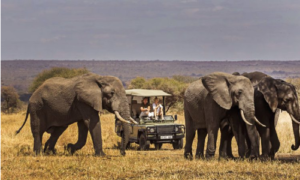
Elephants define Tarangire’s identity more than any other species. The park supports one of Tanzania’s densest elephant populations with estimates exceeding 3,000 individuals during peak seasons. These elephants display remarkable intelligence and complex social organization visible through patient observation. Family groups led by experienced matriarchs demonstrate sophisticated decision-making, communication systems, and care for vulnerable members that reveal cognitive capabilities approaching human-like complexity. Young elephants engage in play that serves educational functions, adolescents test dominance hierarchies, and mature bulls display their size and strength through impressive demonstrations.
The relationship between Tarangire’s elephants and the park’s iconic baobab trees creates fascinating ecological interactions. These extraordinary trees, among Earth’s longest-lived organisms with some exceeding 2,000 years, dominate Tarangire’s landscape with their massive trunks and peculiar inverted-root-like branches. During intense dry seasons, elephants sometimes strip baobab bark or topple entire trees to access the moisture-rich fibrous interior, demonstrating how herbivore pressures can shape vegetation communities even for such massive, ancient organisms.
Beyond elephants, Tarangire harbors healthy populations of buffaloes that form massive herds during dry seasons, lions that follow prey concentrations, leopards that utilize riverine vegetation and rocky outcrops, cheetahs on open grasslands, and a remarkable diversity of antelope species from tiny dik-diks to majestic eland. The park’s baobab-studded landscapes provide extraordinarily photogenic settings, particularly during golden hour when low-angle light illuminates the sculptural tree forms against African skies.
Birdwatchers particularly appreciate Tarangire’s exceptional avian diversity. Over 550 species have been recorded including numerous endemics, migrants, and species associated with different habitat types. The combination of swamps, woodlands, grasslands, and riverine forests creates varied niches supporting this diversity. Yellow-collared lovebirds, often seen in noisy flocks, represent one of several species that attract specific interest from birding enthusiasts.
Exploring Tanzania’s Lesser-Known Safari Destinations
While the northern circuit deservedly attracts most visitors, Tanzania’s lesser-known parks offer equally rewarding experiences for travelers seeking authenticity over accessibility. These destinations require greater commitment—longer travel times, more basic infrastructure, higher costs due to logistics—but reward adventurous visitors with exclusive experiences increasingly rare in popular parks.
Ruaha National Park, Tanzania’s largest, encompasses over 20,000 square kilometers of rugged, semi-arid wilderness in the country’s south-central region. The Great Ruaha River and its seasonal tributaries provide ecological lifelines supporting exceptional wildlife diversity. Ruaha’s remoteness keeps visitor numbers minimal, creating safari experiences characterized by solitude and genuine wilderness character. The park supports Tanzania’s largest elephant population with estimates suggesting 12,000+ individuals, though poaching pressures have historically impacted these numbers. Predator populations are exceptional—Ruaha harbors significant lion prides, substantial leopard numbers, and critically important populations of endangered African wild dogs whose pack sizes and hunting success rates in Ruaha exceed those in many other strongholds.
Katavi National Park, even more remote than Ruaha, protects pristine wilderness in Tanzania’s far west near Lake Tanganyika. Katavi experiences dramatic seasonal transformations as the Katuma River and associated floodplains contract during dry seasons, concentrating wildlife in extraordinary densities. Hippo populations exceeding 4,000 individuals crowd into shrinking pools, creating remarkable viewing opportunities. Buffalo herds numbering thousands congregate on the plains, attracting lion prides and crocodiles in numbers that evoke primordial Africa. Katavi’s inaccessibility—reaching the park typically requires charter flights—ensures visitor numbers remain negligible, creating safari experiences virtually unchanged since tourism began.
Nyerere National Park (formerly part of Selous Game Reserve before recent reorganization) represents Africa’s largest protected area at over 30,000 square kilometers. The Rufiji River system creates complex networks of channels, oxbow lakes, and seasonal floodplains supporting exceptional biodiversity. Nyerere permits activities prohibited in most Tanzanian parks including boat safaris that provide unique perspectives on aquatic and riverine wildlife, walking safaris for intimate bush experiences, and fly camping where mobile camps establish in different locations for maximum flexibility. The varied activities, combined with authentic wilderness character and minimal tourist infrastructure, appeal to safari veterans seeking experiences beyond conventional game drives.
Zanzibar and Coastal Extensions
After days immersed in Tanzania’s dusty inland wilderness, the Zanzibar Archipelago provides perfect contrasts with its tropical climate, pristine beaches, turquoise waters, and rich cultural heritage. These islands, located 25-50 kilometers off Tanzania’s coast, have served as trading hubs for centuries, creating unique cultural fusion visible in architecture, language, cuisine, and genetic heritage of local populations.
Stone Town, Zanzibar’s historic capital, merits UNESCO World Heritage status through its exceptional architectural heritage reflecting centuries of cultural exchange. Arab traders, Persian merchants, Indian financiers, and European colonizers all left marks visible in the narrow winding alleys, ornately carved wooden doors, coral stone buildings, and bustling markets. Key historical sites include the former slave market—a sobering reminder of East Africa’s dark involvement in the slave trade—the Sultan’s Palace Museum, the Old Fort, and the House of Wonders. Simply wandering Stone Town’s labyrinthine streets provides immersive cultural experiences complementing safari’s wildlife focus.
Zanzibar’s beaches rank among the Indian Ocean’s finest, particularly along the northern coast (Nungwi, Kendwa) and eastern shore (Paje, Jambiani, Bwejuu). The northern beaches offer excellent swimming year-round with minimal tidal variation, while eastern beaches experience dramatic tidal fluctuations that expose vast stretches of sand and coral gardens during low tide, creating interesting exploration opportunities. The contrast between safari’s landlocked intensity and beach relaxation helps safari experiences settle into long-term memory rather than remaining brief sensory overload.
The coral reefs surrounding Zanzibar and nearby islands support exceptional marine biodiversity threatened globally by climate change, pollution, and overfishing but still vibrant in protected areas. Mnemba Atoll, a small island northeast of Zanzibar, offers particularly excellent snorkeling and diving with regular sightings of sea turtles, dolphins, diverse reef fish, and occasional whale sharks. Chumbe Island, a private marine conservation area, demonstrates successful coral reef restoration and protection, offering educational opportunities alongside recreation.
Practical Planning for Your Tanzania Safari
Successfully planning and executing a Tanzania safari requires attention to numerous practical considerations that, while not glamorous, significantly impact overall experience quality. Starting with documentation, most nationalities require visas for Tanzania visits. The e-visa system allows convenient online applications processed within 7-14 days, reducing airport arrival complications. Costs vary by nationality but typically range $50-100 for single-entry tourist visas valid 90 days. Some nationalities can obtain visas on arrival, though advance e-visa application eliminates uncertainty.
Health preparations deserve careful attention and should begin 6-8 weeks before departure. Yellow fever vaccination certificates are mandatory for travelers arriving from countries with yellow fever transmission risk and advisable for all travelers visiting multiple East African countries. Additional recommended vaccinations include hepatitis A and B, typhoid, tetanus-diphtheria, and routine immunizations. Malaria represents a genuine health risk in most safari areas, particularly lowland parks and during rainy seasons, making antimalarial prophylaxis strongly advisable. Consultation with travel medicine specialists ensures appropriate medication selection based on itinerary specifics, pre-existing conditions, and medication interactions.
Travel insurance represents essential rather than optional protection. Comprehensive policies should cover medical emergencies including hospitalization, emergency medical evacuation (costs can exceed $100,000 for evacuation from remote parks), trip cancellation/interruption, lost or delayed baggage, and personal liability. Some activities like Kilimanjaro climbing require specific high-altitude trekking coverage. Review policy terms carefully as some exclude “adventure activities” that might include safari elements.
Financial planning requires understanding Tanzania’s currency situation. The Tanzanian shilling serves as official currency though US dollars are widely accepted in tourism sectors. However, dollars should be relatively recent issues (2006 or newer) in good condition—damaged or older bills often face rejection or poor exchange rates. Credit cards see limited acceptance outside major hotels and upscale lodges. ATMs exist in major towns but become scarce in rural areas and may have daily withdrawal limits. Carrying sufficient cash in appropriate denominations (mix of $50 and $100 bills) prevents financial complications, though excessive cash creates security concerns requiring careful management.
Conclusion
Embarking on an African safari Tanzania represents far more than checking items off a bucket list or accumulating impressive photographs for social media. It constitutes a genuine journey into wilderness that still functions according to ecological principles established over evolutionary time, where predator and prey engage in ancient relationships, where seasonal rhythms dictate animal movements as they have for millennia, and where humans assume roles as privileged observers rather than dominant controllers. This experience fundamentally alters perspectives on humanity’s relationship with nature, revealing both our species’ place within ecological systems and our responsibility toward preserving these irreplaceable treasures.
Tanzania has earned its reputation as Africa’s premier safari destination through decades of conservation commitment, infrastructure development that balances accessibility with authenticity, and protection of functioning ecosystems at scales necessary for maintaining ecological integrity. The diversity of experiences available—from witnessing millions of migrating animals to intimate encounters with individual creatures, from luxury lodges to authentic bush camps, from accessible northern circuit parks to remote southern wilderness—ensures Tanzania accommodates virtually every safari preference and budget level.
The memories forged during Tanzania safaris possess unusual longevity and emotional power. Years after returning home, safari veterans find themselves transported back to specific moments with surprising clarity—the sound of lions roaring in pre-dawn darkness, the sight of elephants silhouetted against African sunsets, the smell of dust and grass after brief rains, the feeling of insignificance when surrounded by migrating herds. These sensory memories become touchstones, reminding us of beauty, power, and complexity in natural systems worth protecting at almost any cost.
Your decision to experience an African safari in Tanzania creates ripples extending far beyond personal enrichment. Tourism revenue funds anti-poaching operations, supports local communities living alongside wildlife, maintains infrastructure protecting threatened ecosystems, and creates economic incentives for conservation over habitat conversion. Each safari represents a vote with your financial resources supporting the proposition that wildlife and wild places possess value beyond extractive use, that nature deserves protection not merely for human benefit but for its own inherent worth.
As you plan your Tanzania safari, remember that you’re not simply purchasing a service but investing in conservation, supporting sustainable development, and participating in one of humanity’s most meaningful activities—bearing witness to nature’s grandeur while it still exists to be witnessed. Tanzania awaits with its timeless landscapes, abundant wildlife, and transformative experiences that will reshape your understanding of what it means to share a planet with Earth’s magnificent diversity of life.
Key Takeaways
- Unmatched Conservation Scale: Tanzania protects nearly 300,000 square kilometers across sixteen national parks and numerous reserves, creating functioning ecosystems at scales necessary for ecological integrity
- Migration Timing Strategy: Plan visits around specific phases—calving season predator action (January-February), western movements (April-June), or northern Mara River crossings (July-October)
- Ngorongoro’s Reliability: The crater’s contained ecosystem ensures consistent wildlife viewing with 25,000-30,000 mammals and excellent Big Five opportunities year-round
- Tarangire’s Dry Season: June-October transforms this underrated park into an elephant paradise with exceptional concentrations rivaling more famous destinations
- Southern Parks Adventure: Ruaha, Katavi, and Nyerere offer exclusive wilderness experiences with minimal tourists for adventurous travelers willing to accept basic infrastructure
- Zanzibar Beach Balance: Tropical island extensions provide perfect contrasts to inland safaris with cultural heritage, pristine beaches, and marine activities
- Seasonal Trade-offs: Dry season delivers optimal conditions but peak prices; wet season offers value, dramatic landscapes, and exclusive experiences
- Activity Diversity: Walking safaris, boat safaris, balloon flights, and night drives create varied perspectives impossible from standard game drives alone
- Budget Flexibility: Accommodation ranges from $150 daily budget camping to $2,000+ ultra-luxury, making Tanzania accessible across financial spectrums
- Conservation Investment: Tourism directly funds protection, creating alignment between economic incentives and wildlife preservation
Frequently Asked Questions
How do I choose between northern and southern Tanzania safari circuits?
The northern circuit (Serengeti, Ngorongoro, Tarangire, Lake Manyara) offers more developed infrastructure, easier accessibility, greater accommodation variety, and the Great Migration spectacle. It’s ideal for first-time safari visitors, those with limited time, families, and travelers prioritizing comfort. The southern circuit (Ruaha, Nyerere, Katavi) provides more remote wilderness, exclusive experiences, fewer tourists, and varied activities including walking and boat safaris. Southern parks suit adventurous travelers, safari veterans seeking authenticity, and those willing to accept basic infrastructure for genuine wilderness. Budget also factors in—southern safaris typically cost more due to flight requirements and limited competition among operators.
What’s the ideal length for a first Tanzania safari?
First-time visitors should allocate 7-10 days for safari activities, allowing coverage of 3-4 northern circuit parks without excessive rushing. This duration provides time for multiple game drives per location, travel days between parks, rest, and processing experiences. Shorter 4-5 day safaris feel rushed with more time driving than wildlife viewing. Longer 10-14 day safaris allow more relaxed pacing, southern park additions, or Zanzibar extensions. Remember that safari experiences are intense—daily early wake-ups, long game drives, unfamiliar environments—so adequate time prevents exhaustion while maximizing enjoyment and wildlife encounters.
Should I book safari through international agents or local Tanzanian operators?
Booking directly with reputable Tanzanian operators typically provides better value by eliminating middleman markups while ensuring your investment reaches local economies. Research operators thoroughly through independent reviews on platforms like SafariBookings or TripAdvisor, verify licenses and memberships in professional associations (TATO – Tanzania Association of Tour Operators), and communicate extensively before committing. However, international agents provide value for travelers uncomfortable with direct international transactions, those wanting comprehensive insurance protection, or people lacking time for detailed research and communication. The key is selecting reputable, ethical operators regardless of booking method, prioritizing those with conservation commitments and fair labor practices.
What’s the difference between lodge and tented camp accommodation?
Lodges are permanent structures, typically built from concrete, wood, or stone with conventional hotel-like amenities including electricity, plumbing, restaurants, and pools. They offer maximum comfort and weather protection but less authentic bush atmosphere. Tented camps use permanent or semi-permanent canvas structures with varying luxury levels from basic walk-in tents with shared facilities to luxurious tents with en-suite bathrooms, proper beds, and elegant furnishings. Luxury tented camps often rival lodges in comfort while maintaining authentic safari character—falling asleep to animal sounds provides immersion lodges can’t match. Mobile camps, a specialized tented category, relocate seasonally to follow wildlife movements, particularly the Great Migration, offering unmatched proximity to action.
Can I photograph wildlife effectively with a smartphone?
Modern smartphones can capture impressive safari images, particularly of larger animals at closer ranges, landscapes, and atmospheric scenes. Computational photography features in recent iPhones and Android flagships partially compensate for optical limitations. However, smartphones struggle with distant wildlife, low-light conditions, fast action, and telephoto requirements that safari photography demands. Budget-conscious photographers achieve excellent results with entry-level DSLRs or mirrorless cameras paired with telephoto zoom lenses (minimum 200-300mm, ideally 400mm+). Serious wildlife photographers invest in professional telephoto lenses (400-600mm) that significantly enhance results. Regardless of equipment, understanding wildlife behavior, anticipating moments, and proper composition matter more than gear specifications.
How do tipping expectations work on Tanzania safaris?
Tipping represents significant income for safari guides and camp staff, complementing often-modest base salaries. Recommended guidelines suggest $20-30 per person per day for guides who directly enhance your experience through knowledge, spotting skills, and interpretation. Camp/lodge staff collectively receive $10-15 per person per day, typically placed in communal tip boxes distributed among kitchen staff, housekeepers, and others. For private safaris with dedicated guides, consider higher amounts reflecting personalized service. Drivers (when separate from guides) receive $10-15 daily. Some luxury properties include service charges, making additional tipping optional. Always carry sufficient small US dollar bills for tipping convenience—singles, fives, tens, and twenties prove most useful.
What camera settings work best for safari wildlife photography?
For general wildlife photography, use aperture priority mode (A/Av) with relatively open apertures (f/4-f/5.6) to blur backgrounds while keeping subjects sharp. Set ISO to auto with upper limits around 1600-3200 depending on camera capabilities—modern cameras handle these ISOs well. Use continuous autofocus (AF-C/AI Servo) to track moving subjects. Shutter priority mode (S/Tv) works well for action, setting speeds around 1/1000s minimum for mammals, faster for birds. Shoot in RAW format for maximum post-processing flexibility. Take advantage of early morning and late afternoon golden hour light—harsh midday sun creates unflattering shadows. Most importantly, focus on eyes, maintain sharp focus, and capture behavioral moments rather than just static portraits.
Is Tanzania safari appropriate for elderly travelers or those with mobility limitations?
Tanzania safaris can absolutely accommodate elderly travelers and those with mobility considerations through careful planning. Game drives occur from seated positions in vehicles, requiring minimal physical exertion. Many lodges and luxury camps offer ground-floor accommodations, assistance with luggage, and adapted facilities. However, some considerations apply: dusty conditions may challenge respiratory issues, long bumpy drives can be uncomfortable for those with back problems, and some lodges require climbing stairs or navigating uneven terrain. Discuss specific requirements with operators during planning—reputable operators accommodate limitations through vehicle modifications, lodge selection, and itinerary adaptations. Avoid destinations requiring extensive walking or climbing (Ngorongoro Crater rim lodges may require stairs) and schedule rest days between intensive game drive periods.