

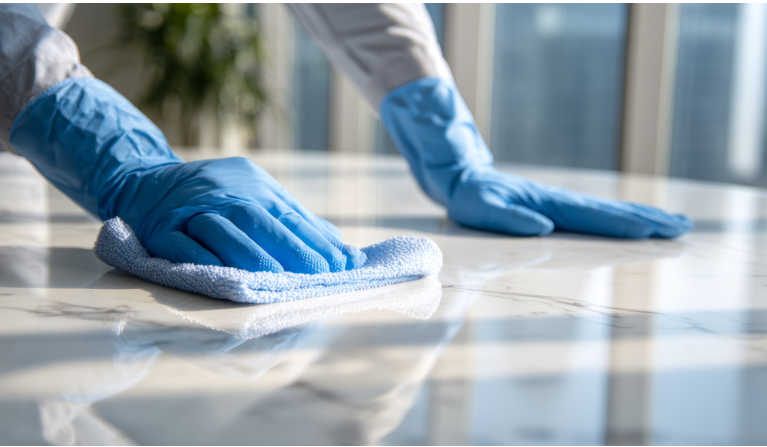

Boston’s office buildings are sparkling these days. Nevertheless, cleaning crews seem to have disappeared. Technology has revolutionized everything. Floors are polished, the air is clean, and surfaces are spotless. And what about those old-fashioned cleaning crews? Gone.
Smart Sensors Track Cleanliness in Real Time
Those little white boxes on the walls do more than most people realize. They count foot traffic through lobbies. They test the air quality. Some even monitor bathroom stall usage. Sounds odd, maybe even invasive, but the results speak for themselves.
Spill detection went from science fiction to standard practice almost overnight. A sensor catches that coffee puddle by the elevator within seconds. Staff phones buzz with the exact location. Since Boston’s office towers installed these systems, slip-and-fall incidents crashed. Insurance companies noticed. Premiums dropped accordingly.
Robotic Cleaners Handle Routine Tasks
After midnight strikes and Boston’s workforce heads home, robots emerge from their closets. They look like a Roomba meets a Zamboni. They know the building’s layout completely. Furniture? They glide around it. Low battery? They hustle back to their charging stations without prompting.
These machines do more than clean; they learn. Tuesday’s west hallway always needs extra attention. The carpet near accounting shows wear patterns months before human eyes would notice. Automated reports replace hours of supervisor work. Humans remain necessary. Keyboards need sanitizing. Decorative molding collects dust in weird angles. Glass partitions need that streak-free shine. Robots cannot handle the detail work.
Digital Scheduling Optimizes Crew Deployment
Paper schedules taped inside closets feel like relics from another century. Today’s software crunches hundreds of factors simultaneously. Law firms demand 5 AM service before their early-bird partners arrive. Tech companies prefer late-night cleaning after their developers finally leave. The algorithm remembers everyone’s preferences and staffs accordingly.
Boston weather adds chaos to any schedule. The system pulls weather data and adjusts staffing before storms hit. Marathon Monday? Extra crews for downtown. Big conference at the convention center? More staff for nearby hotels and restaurants. Anticipation beats reaction every time.
Smartphones transformed how cleaners work. Custom apps show tonight’s assignments, track supply levels, and flag maintenance issues instantly. A broken paper towel dispenser gets reported with two taps. Supervisors use tablets to fix problems before complaints arise.
Green Technology Reduces Environmental Impact
Salt, water, and electricity. This is all it takes. Boston buildings now generate their own cleaning solutions using machines that would’ve seemed impossible twenty years ago. No delivery trucks. No chemical storage rooms. No panic when supplies run low on a holiday weekend.
UV-C light joined the cleaning arsenal. After everyone leaves, these systems bathe surfaces in germicidal light. What started in hospital operating rooms spread to schools, then offices, now everywhere. Commercial cleaning services in Boston embraced this shift enthusiastically. Companies like All Pro Cleaning Systems stand out by blending these innovations with the personal service that keeps Boston businesses loyal year after year. Learn more about Commercial cleaning services with All Pro Cleaning Systems.
Data Analytics Drive Continuous Improvement
Numbers reveal secrets. That mop stroke, that emptied trash can, that restocked soap dispenser. Everything becomes a data point. Algorithms crunch these numbers and find patterns no human would catch.
Toilet paper consumption sounds boring until the data shows something weird. Third-floor usage doubles overnight. Why? Maybe the dispenser jams and wastes half each pull. Maybe a new tenant moved in with thirty extra employees. Without data, it’s a mystery. With data, it’s solved before anyone complains.
Conclusion
Technology revolutionized Boston’s facility care industry, though humans remain essential. Cleaners now tackle challenging tasks while machines handle repetition. Air got cleaner thanks to advanced filtration. Success blends human judgment with tech efficiency, not just robots and sensors. That combination keeps Boston’s buildings spotless day after day.